
Replacing copy-paste AI resume work with a guided workflow that acts like an extension of the career coach
Customer Type: Workforce board, career center, case management team, nonprofit, Job Corps center, or career coaching provider
Audience Served: Job seekers, participants, students, clients, career coaches, and case managers
Primary Challenge: Staff were using free AI tools for resume work, but the process was still manual, prompt-heavy, copy-paste driven, and often too generic
Jobflow Workflow: Upload or build resume → guided coaching questions → personalized resume improvement → job matching → fit breakdown → one-click resume and cover letter tailoring → application tracking
Key Outcomes: Less manual resume work, no prompting required, stronger personalization, better application quality, faster tailoring, and more staff capacity
Career staff are already using AI to help job seekers.
In a recent poll we conducted with workforce development boards, case managers and career coaches said they are using free versions of ChatGPT, Copilot, or similar tools to rewrite resumes, improve bullet points, draft cover letters, and help participants tailor materials.
This is a big shift from where we were even a year ago, and it makes sense. Resume work is one of the most time-consuming parts of career support.
But general AI tools were not built for workforce development workflows. And we've seen that allowing AI to make decisions on how it believes a resume should be written can leave job seekers in the rejection pile.
General AI tools still require staff to prompt, copy, paste, rewrite, check quality, re-prompt, and manually connect the output to a real job posting. The results can also feel generic because the system is only as good as the information the staff member knows to provide.
Jobflow gives workforce teams a purpose-built alternative.
There is no prompting required. Jobflow guides the participant like a resume writer or career coach, asks questions to uncover what makes them unique, improves the resume, matches them to jobs, explains fit, and tailors the resume and cover letter in one click based on what the hiring manager is looking for in each role. It even finds them ideal-match jobs based on their skills, experience, and job preferences, while coaching them on their fit for every role.
It works over the top of any job site the job seeker chooses to use, making it a powerful workflow that extends the reach of career staff without replacing their judgment.
The Situation
A workforce board operating 6 career centers in California was helping job seekers with resumes, cover letters, job search, and application preparation.
Like many career staff, they had started using free AI tools to speed up resume work. If a participant had a weak resume, staff might paste sections into ChatGPT or Copilot and ask for stronger bullet points. If a participant found a job, staff might paste the job description into the tool and ask for a tailored version.
It helped, and even felt like magic at first, but it was still a largely manual process that also did not extend past the job-seeking customers' initial career services visit.
They also started noticing that all the outputs looked and sounded the same. To combat that, staff had to know what to ask, what context to include, what output to trust, and how to clean up the result. Participants still depended heavily on staff to operate the process.
For a team serving hundreds or thousands of job seekers monthly, that was not scalable.
The team needed something more structured, more personalized, and easier for participants to use on their own.
The Challenge
Using available AI tools was a step in the right direction. The problem was that Copilot and ChatGPT did not go far enough to create a personalized experience for each participant, burden was still placed on career staff, and the workforce board had no reporting or oversight on what participants did once they left the career center. Were they getting hired? Were the AI-created resumes helping people land interviews, or were they being flagged by hiring managers and tossed out?
Staff still had to:
- Write prompts
- Copy and paste resumes
- Copy and paste job descriptions
- Explain the participant’s background
- Ask follow-up questions manually
- Edit generic language
- Check whether the resume was accurate
- Tailor each version by hand
- Move content between tools, documents, and job sites
A generic AI tool might improve the wording, but it will not ask the participant the right follow-up questions to help them expand on accomplishments that are missing, or to help them expand on generic language with key details. It may not understand the participant’s job goals, work preferences, transferable skills, or barriers. It may not connect the resume to the specific role as deeply as a trained career coach would.
That left staff with a frustrating middle ground: AI made the work faster, but not automatic, not fully personalized, and not built into the participant’s actual job-search workflow with visibility once a person was at home searching for jobs.
Free AI tools helped us write faster, but Jobflow gave us the full workflow: personalized resume building, fit coaching, and one-click tailoring without all the prompting and copy-paste.
The Jobflow Approach
Jobflow was built specifically for resume writing, tailoring, job matching, and career support.
Instead of asking staff to prompt a chatbot, Jobflow guides the participant through a structured workflow.
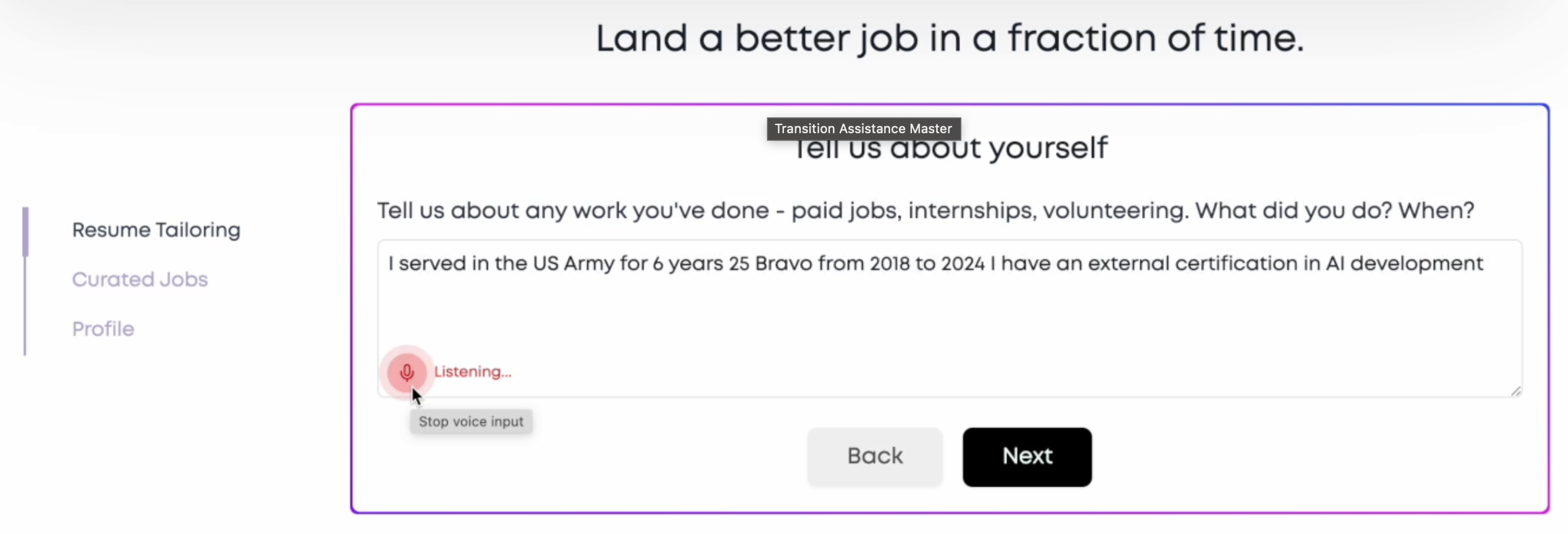
Participants can upload an existing resume or build one from scratch. Jobflow then acts like a resume writer and career coach by asking questions that help uncover stronger material, such as:
- What did you accomplish in this role?
- Did you train, lead, or mentor anyone?
- What specific programs or tools did you use?
- Did you work with customers, patients, students, or clients?
- Did you use tools, systems, equipment, or software?
- What responsibilities were most important?
- What was the outcome of the work you did and how can we quantify that?
That gives us a much stronger base resume which is one component of an enriched digital employment profile we create for each candidate.
Once the resume is built or improved, Jobflow matches the participant to relevant jobs, explains their fit, identifies gaps, and creates tailored resumes and cover letters for each opportunity before organizing all of their job search and application documents.
And because Jobflow works over the top of any job site, participants can use it while they search for jobs on the State's job bank, employer career sites, Indeed, LinkedIn, Google, Handshake, or other sources.
The Workflow in Action
A participant came to a career coach with no existing resume after being laid off.
Before Jobflow, the coach might have asked the participant a series of questions and filled out a resume template, or typed the responses into ChatGPT, written a prompt, reviewed the output, edited the language, moved the content into a resume format. Then, they might have searched for jobs to copy and paste into ChatGPT to ask for the resume to be tailored for the role.
With Jobflow's resume builder, the participant spoke responses to questions that were asked of her about her background, work history, and career goals.
Jobflow identified weak responses, asked follow-up questions, and helped the participant add missing detail. Instead of producing generic bullet points, it helped uncover specifics about customer service, reliability, team coordination, software use, safety procedures, and problem-solving with outcome-based results to highlight.
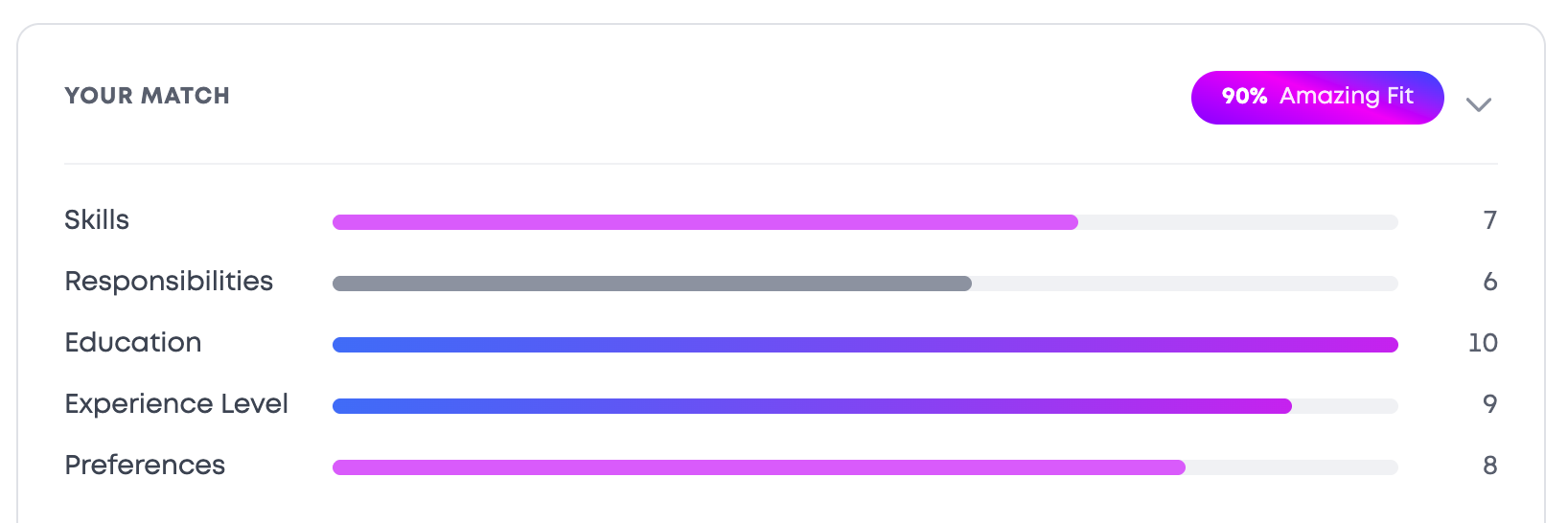
A new resume was instantly created for her by pulling from key examples from the most successful resumes from other users on Jobflow who were recently hired. Jobflow then instantly matched her to 5 new job postings from the same day where she was a 90%+ fit for the accountabilities, experience, and her job preferences. She was coached on her fit for each role, and with one click, Jobflow tailored a new copy of her resume and wrote a personalized cover letter for the hiring manager that highlighted her most relevant experience.
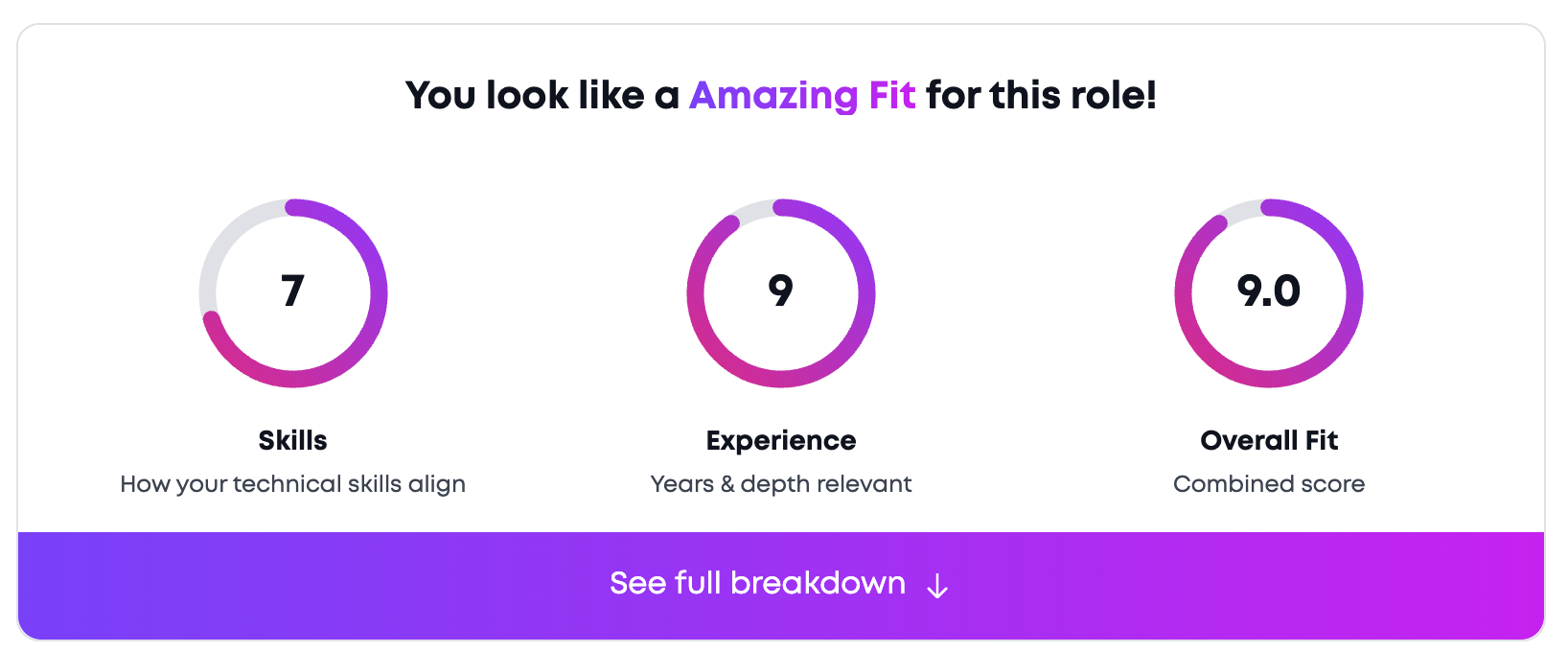
The coach no longer had to operate the AI manually. And for the first time, the career staff and case managers had visibility into participants' resume and job search activity which allowed for better reporting and more action-oritented follow up with the candidate.
The Results
Jobflow helped the career team move from manual resume work to a guided participant workflow, which the workforce board estimates to save 1 hour per week for every participant they serve, while providing stronger service after participants leave a career center.
They now also have visibility into which participants completed onboarding, how many jobs each is matched to daily, if they have requested tailored resumes for each of the job matches, how many and which jobs they have applied to, and where each is in the hiring process.
The biggest shift was that Jobflow acted as an extension of the career staff while job seekers were at home searching for jobs. It helped every participant receive guided resume support, job-specific tailoring, and fit coaching, while staff stayed focused on the human parts of the work: motivation, judgment, accountability, and next steps.
The impact included:
- Less copy-paste work for staff
- No prompting required
- More personalized resume content
- Better questions to extract unique experience
- Faster resume improvement
- One-click resume and cover letter tailoring
- Stronger alignment with each job posting
- More consistent application quality across participants
- Better use of staff time for coaching and follow-up
- A workflow participants could use remotely or between appointments
Why It Matters
Free AI tools can help career staff write faster, but they do not solve the full workflow.
They still require staff to operate the tool, prompt it correctly, provide context, move content between systems, and make sure the final result is useful for a real application.
It gives workforce teams a purpose-built resume and job-search workflow that is personalized to each participant, connected to real job postings, and usable across any job site.
____
Give every participant personalized resume support without making staff manually operate AI tools. Try it out for free, or let's set up a demo for your career staff supporting job seekers.
Jobflow acts as an extension of career staff, helping job seekers build stronger resumes, understand their fit, and tailor applications for any job they find on any job site.


Related posts
Browse all posts


