
Giving young job seekers a guided path from career training to stronger resumes, better-fit jobs, and confident applications
Customer Type: Job Corps center, youth workforce program, career training provider, nonprofit, or workforce development agency
Audience Served: Young job seekers, Job Corps participants, students, trainees, and early-career workers
Primary Challenge: Participants had limited work history and needed help turning training into strong resumes, realistic job matches, and confident applications
Jobflow Workflow: Resume builder → training and skills translation → job matching → fit coaching → tailored resume and cover letter → application tracking → staff visibility
Key Outcomes: Faster resume creation, higher participant confidence, stronger connection between training and jobs, more completed applications, staff time saved, and better visibility into participant progress
For many young job seekers, the hardest part of getting hired is how to turn limited experience into a compelling resume, a productive job search, and an application that employers take seriously.
Job Corps and youth workforce programs help participants build valuable skills in healthcare, construction, logistics, hospitality, information technology, customer service, advanced manufacturing, and other in-demand fields. But once participants complete training or prepare for placement, many still struggle to explain what they learned, or how to translate their new credentials into job search terms and applications.
A student may complete hands-on training or gain real project experience, but that is a completely different skill set from writing resumes and cover letters, researching employers, or even knowing where to begin.
Jobflow helps close that gap.
It gives participants an extension of their career advisors - a guided workflow that connects their training to real job opportunities, helping them build stronger resumes, understand their fit, tailor applications, and move from program completion to employment action with more confidence.
The Situation
A regional operator of 15 Job Corps centers helps students complete career training and prepare for employment. They came to us to assist with accelerating employment for participants working toward careers in healthcare, construction, trades, logistics, IT support, and hospitality.
The operator offers strong training and is known for producing quality candidates with employable skills. But youth participants still needed significant help turning training into job-ready application materials. Staff were doing their best to help, but the process was heavily manual and offered limited ability to scale to roughly 6,000 participants annually.
For example, a participant might complete training, yet still need one-on-one help to answer basic job-search questions:
- What jobs am I qualified for now?
- How do I describe my training on a resume?
- How do I make limited experience look professional?
- Which certifications should I highlight?
- What should I say in a cover letter?
- How do I know if a job is realistic for me?
- How do I keep track of where I applied?
The Challenge
The Job Corps operator had been using a combination of career staff and resume writers to help their students, along with a legacy job matching solution they described as offering little more than 'noise' through daily, irrelevant job alerts.
Students had the right skills, but they did not know how to find jobs or communicate their qualifications. They did not know which employers or roles were the best next step, and the application process felt confusing and intimidating.
Career coaches and placement teams had to help participants from the ground up:
- Build a first resume
- Rewrite incomplete or generic resumes
- Translate training into employer-friendly language
- Identify transferable skills
- Find realistic entry-level jobs
- Explain why certain roles were a fit
- Draft cover letters
- Encourage participants to complete applications
- Track progress and follow up
This created a recurring bottleneck that prevented students from being placed. And the Job Corps operator is largely judged on employment outcomes from their training.
The Jobflow Approach
Jobflow gives youth workforce and Job Corps participants a structured, guided path from training to job-ready applications through a fully-automated process.
Instead of starting with a blank resume template or a generic job search, participants can build or improve their resume around the skills, training, certifications, projects, and early experience they already have.
For a student with limited work history, Jobflow helps identify valuable experience that might otherwise be overlooked, including:
- Career training
- Certifications
- Classroom projects
- Hands-on labs
- Internships or work-based learning
- Volunteer experience
- Part-time jobs
- Campus leadership
- Team projects
- Customer service experience
- Safety training
- Technical skills
- Reliability, attendance, and work readiness
Jobflow then helps turn that information into a professional resume by each participant answering a few simple questions.
From there, Jobflow matches participants to jobs that align with their training and experience. It explains why each role is a fit, identifies possible gaps, and helps participants understand how to position themselves.
When a participant is ready to apply, Jobflow creates tailored resumes and cover letters for each specific job, helping them submit stronger, more relevant applications.
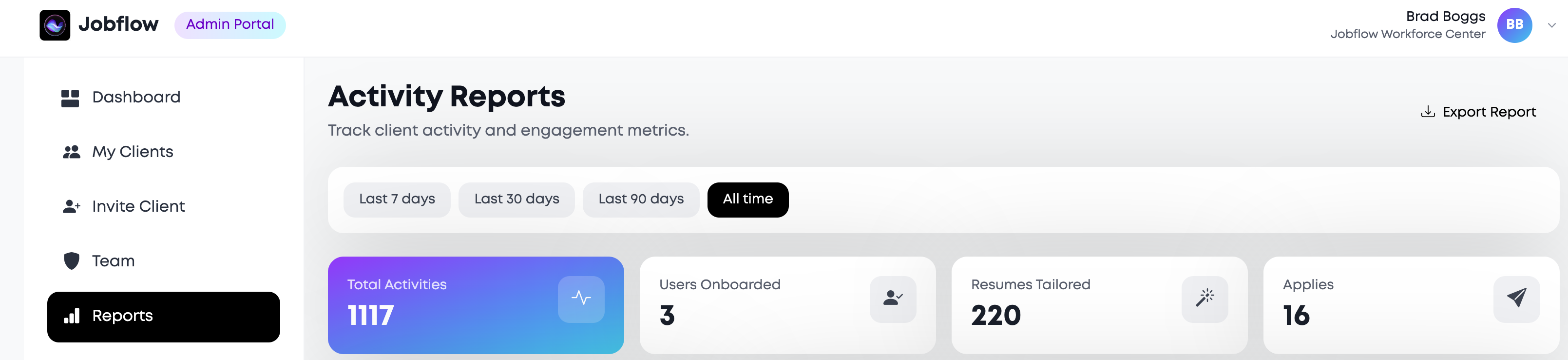
Staff can monitor participant activity and step in where human coaching matters most: motivation, decision-making, interview readiness, employer referrals, and accountability.
The Workflow in Action
One participant was completing training in healthcare support and preparing to look for her first full-time role.
She had completed coursework, earned a basic certification, practiced patient communication, learned safety procedures, and completed hands-on training. But her resume was thin. It listed a part-time retail job and a few generic skills, but it did not clearly show how her training connected to healthcare employment.
She was unsure whether she should apply for medical receptionist roles, patient care assistant jobs, home health support, front desk positions, or general customer service roles.
Using Jobflow, she started by building a stronger resume. She was prompted to include her training, certification, classroom experience, hands-on skills, customer service background, and reliability. It helped turn her experience into clear, employer-friendly resume language.
“Jobflow helped participants see how their training connected to real jobs, then gave them the resume, coaching, and tailored application materials to pursue those opportunities with confidence.”
For example:
Before:
“Completed healthcare training program.”
After:
“Completed healthcare support training focused on patient communication, safety procedures, basic clinical terminology, documentation, and professional standards for entry-level healthcare environments.”
Once her resume was stronger, Jobflow matched her to better-fit entry-level roles, including:
- Medical Receptionist
- Patient Services Representative
- Home Health Aide
- Healthcare Customer Support Specialist
- Clinic Front Desk Assistant
- Patient Care Assistant
- Scheduling Coordinator
For each role, Jobflow explained why it fit her background and what parts of her training or experience she should emphasize.
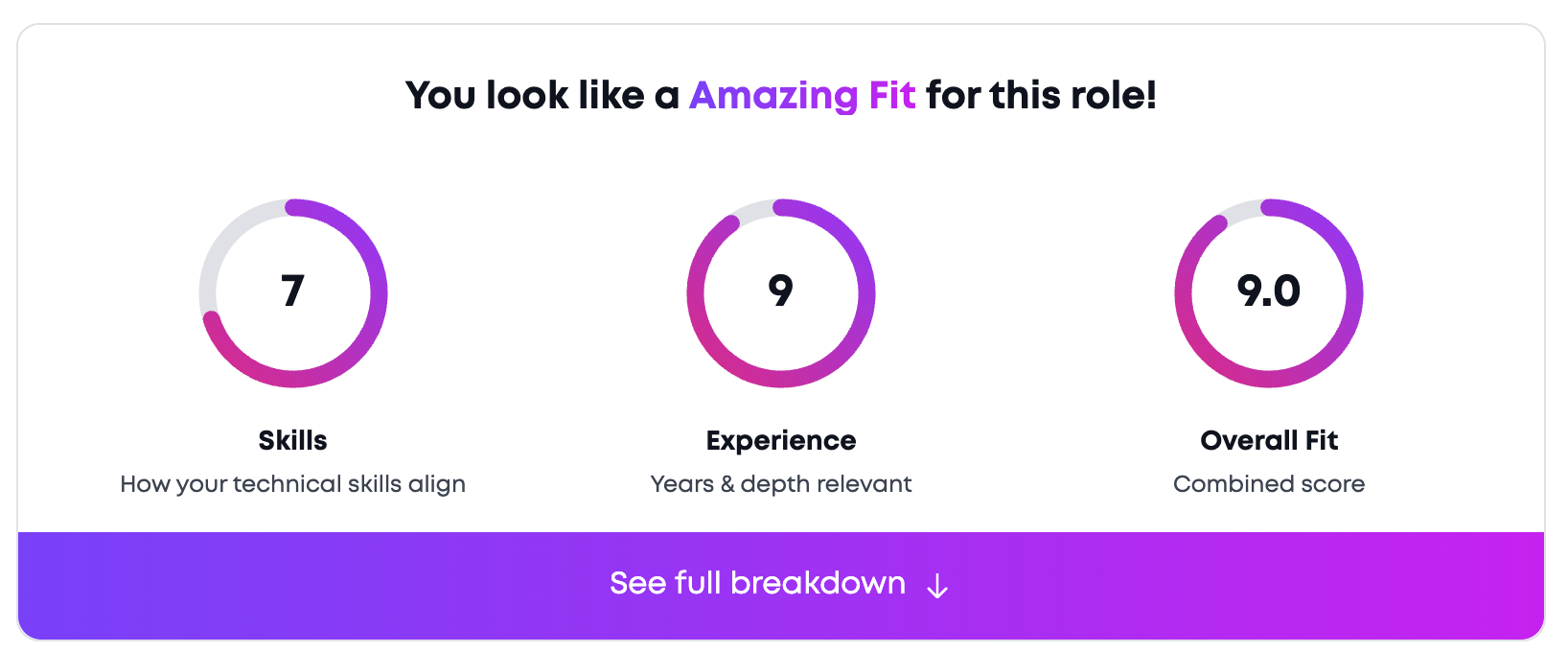
When she selected a clinic receptionist role, Jobflow tailored her resume and cover letter to that job posting. The tailored version highlighted how she demonstrated patient communication, professionalism, scheduling, attention to detail, and her healthcare training, all of which mirrored what the hiring manager was looking for in applicants.
Instead of applying with a generic resume, she applied with materials that connected her training directly to the employer’s needs, and she was placed successfully within one week of applying.
The Results
Jobflow helped participants move from training completion to employment action faster and with more confidence, while multiplying the impact of career staff.
Participants who previously needed extensive one-on-one help could begin building stronger resumes, exploring matched jobs, and preparing tailored applications in a guided workflow. Staff could still coach and support them, but they no longer had to start every participant from a blank page.
The impact included:
- Faster resume building for participants with limited work history
- Stronger resumes that included training, certifications, projects, and transferable skills
- Better job matching based on each participant’s actual skills and program pathway
- More confidence among young job seekers who were unsure how to present themselves
- More tailored resumes and cover letters for real applications
- More completed applications after training
- Less repetitive resume-writing work for staff
- Better visibility into participant progress and job-search activity
- Clearer connection between program training and employment outcomes
For staff, Jobflow made career readiness more scalable.
Instead of spending most of their time helping participants write basic resumes, staff could focus on higher-value support:
- Reviewing job choices
- Coaching participants through gaps
- Preparing for interviews
- Helping with employer referrals
- Encouraging follow-through
- Supporting participants who need extra help
Why It Matters
Youth workforce and Job Corps programs are more than training programs. They are employment pathways.
But the transition from training to employment is where many young people need the most structure.
A participant may complete a credential and still struggle to get hired if they cannot explain their skills, identify realistic opportunities, or submit a strong application. A program may deliver excellent training and still have difficulty proving employment outcomes if students are not supported through the actual job-search process.
Jobflow helps connect those pieces.
It turns training into job matches, role fit coaching, and tailored applications that lead to employment. And it gives staff a clearer view of how participants are progressing.
____
Give every young job seeker a guided path from training to real applications. Try it out for free, or let's set up a demo for your career staff supporting Job Corps and youth programs.
Jobflow helps Job Corps and youth workforce programs turn career training into stronger resumes, better-fit job matches, tailored applications, and measurable employment progress.


Related posts
Browse all posts


