
Helping veterans and military spouses translate experience, build stronger resumes, find ideal-match jobs, and apply with confidence.
Customer Type: Veteran transition program, military family employment program, workforce agency, or career services provider
Audience Served: Transitioning service members, veterans, military spouses, and family members
Primary Challenge: Military experience did not translate clearly into civilian resumes, job matches, or application materials
Jobflow Workflow: MOS/occupation input → voice-guided resume builder → civilian resume translation → job matching → fit coaching → tailored resume and cover letter
Key Outcomes: Faster resume creation, better translation of military experience, stronger job matches, more confident applications, less manual burden on staff
Transitioning out of military service is not just a job change. For many service members, it is a full translation exercise.
Many possess years of leadership experience, discipline, technical training, operational expertise, logistics management, security responsibilities, personnel oversight, and problem-solving skills under pressure. But when they enter the civilian job market, much of that experience is locked inside military language, federal resume formats, MOS codes, and acronyms that private-sector hiring managers may not immediately understand.
That gap can cause highly qualified candidates to be missed by hiring teams based on how they present on paper.
Jobflow helps close that gap by giving transitioning service members and military spouses a guided, AI-powered job-search workflow that starts with their military background and turns it into civilian-ready resumes, stronger job matches, fit coaching, and tailored application materials for each role.
“Jobflow turned my military service into resumes that hiring managers understand, found me job openings matching my transferable skills, and saved me months of work. I just accepted a great role in the private sector, and would have been lost without this service!"
The Situation
A transitioning service member joined Jobflow upon invitation from one of the Transition Assistance Programs we support on Army installations, after more than eight years of military service. His background included team leadership, logistics coordination, equipment accountability, safety compliance, training support, and operational planning.
On paper, however, his experience was difficult to understand outside of a military context. His resume was written heavily around his MOS, unit responsibilities, military terminology, and internal duty descriptions.
He was unsure which civilian roles fit him, where he should be searching for jobs, and how he was supposed to turn his background into resume language a private-sector employer would recognize.
The Challenges
The challenges are common for transitioning service members, addressing three basic questions:
- What civilian jobs actually fit my military experience?
- How do I explain my service in language employers understand?
- How do I tailor my resume for each job without starting over every time?
For staff supporting transitioning service members, this work can be highly manual. A career coach may need to interpret the service member’s MOS, ask follow-up questions, identify transferable skills, rewrite military language, explain potential career paths, and then help tailor the resume for each application.
That level of support is valuable, but it is difficult to deliver consistently at scale.
Many service members also struggle because traditional resume builders assume the user already knows how to describe their work in civilian terms. But a transitioning service member may not know whether their experience aligns better with operations management, logistics, project coordination, security, maintenance, transportation, supply chain, training, public safety, or team leadership roles.
They need more than a blank resume template. They need a guided solution.
The Jobflow Approach
Jobflow starts by making the resume-building process simple, even for users who are not tech savvy.
The service member can begin by telling Jobflow their MOS, military occupation, job title, branch, years of service, and major responsibilities. Instead of forcing them to write polished resume language from scratch, Jobflow asks guided questions and can support a voice-operated workflow where the user simply talks through their experience.
For example, a service member can say:
“I served in the US Army for 6 years, 25 Bravo, from 2018 to 2024. I have an external certification in AI development from Coursera.”
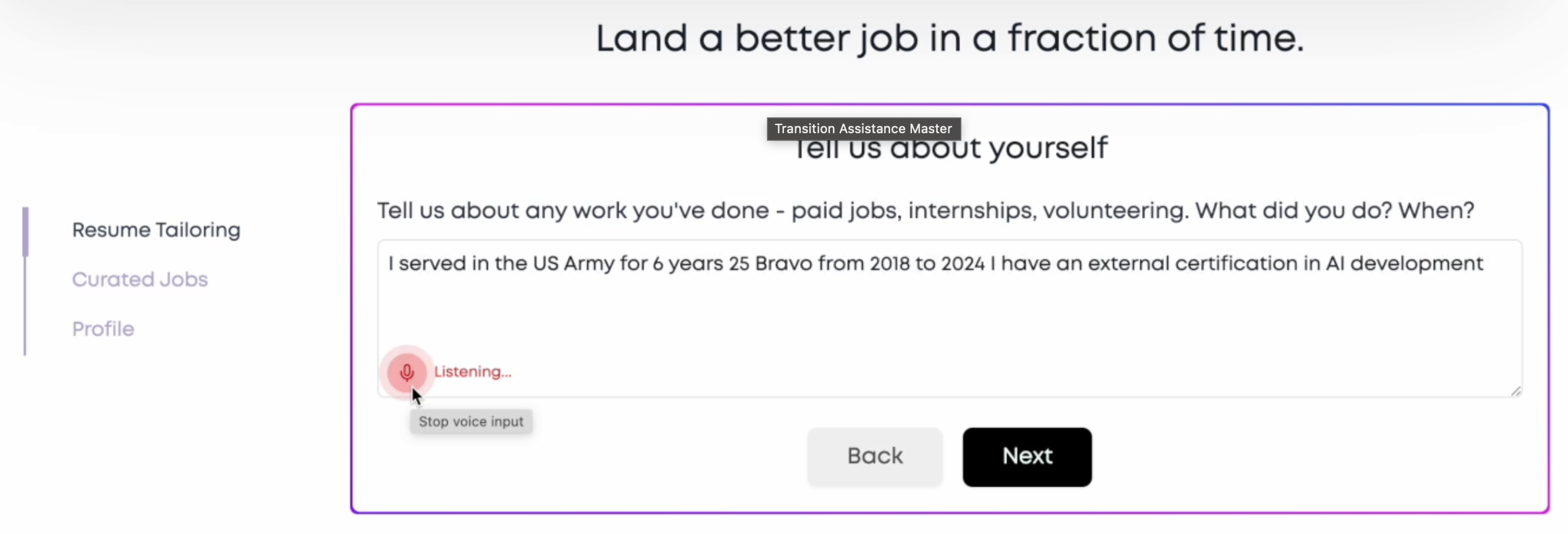
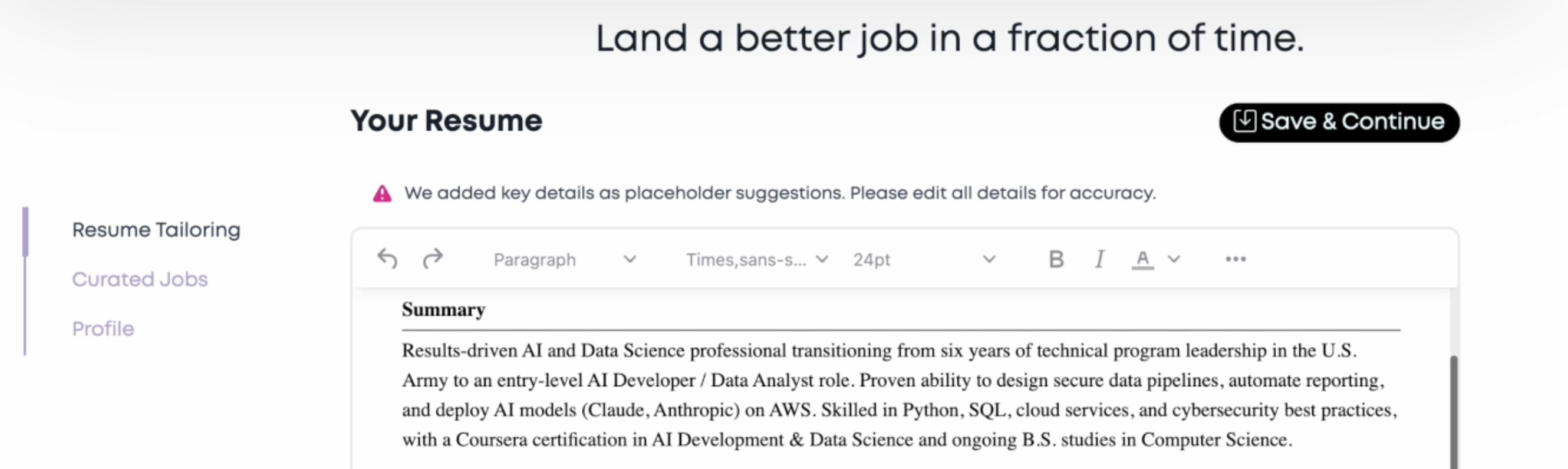
Then Jobflow builds or improves the resume in employer-friendly language before matching the service member to jobs.
That order matters.
Instead of asking the user to search for jobs with an incomplete or military-heavy resume, Jobflow first helps them create a stronger civilian profile. Then it uses that profile to identify better-fit civilian roles, explains why each job fits, identifies possible gaps, and creates tailored resumes and cover letters for specific applications.
The Workflow in Action
The service member began with only a basic military resume and an MOS code. He was unsure what jobs to search for and did not know how to position his experience.
Using Jobflow, he was able to:
1. Instantly build a civilian-ready resume
He entered his MOS and described his responsibilities using plain language. With voice support, he did not need to type everything perfectly or know the right resume wording.
Jobflow translated his background into civilian language, converting military responsibilities into employer-relevant resume bullets.
2. Identify transferable skills
Jobflow helped extract the skills that mattered most to civilian employers, including leadership, logistics, operations, compliance, training, coordination, and accountability.
This helped the service member understand that his experience could fit multiple civilian career paths, not just one obvious job title.
3. Match to civilian job opportunities
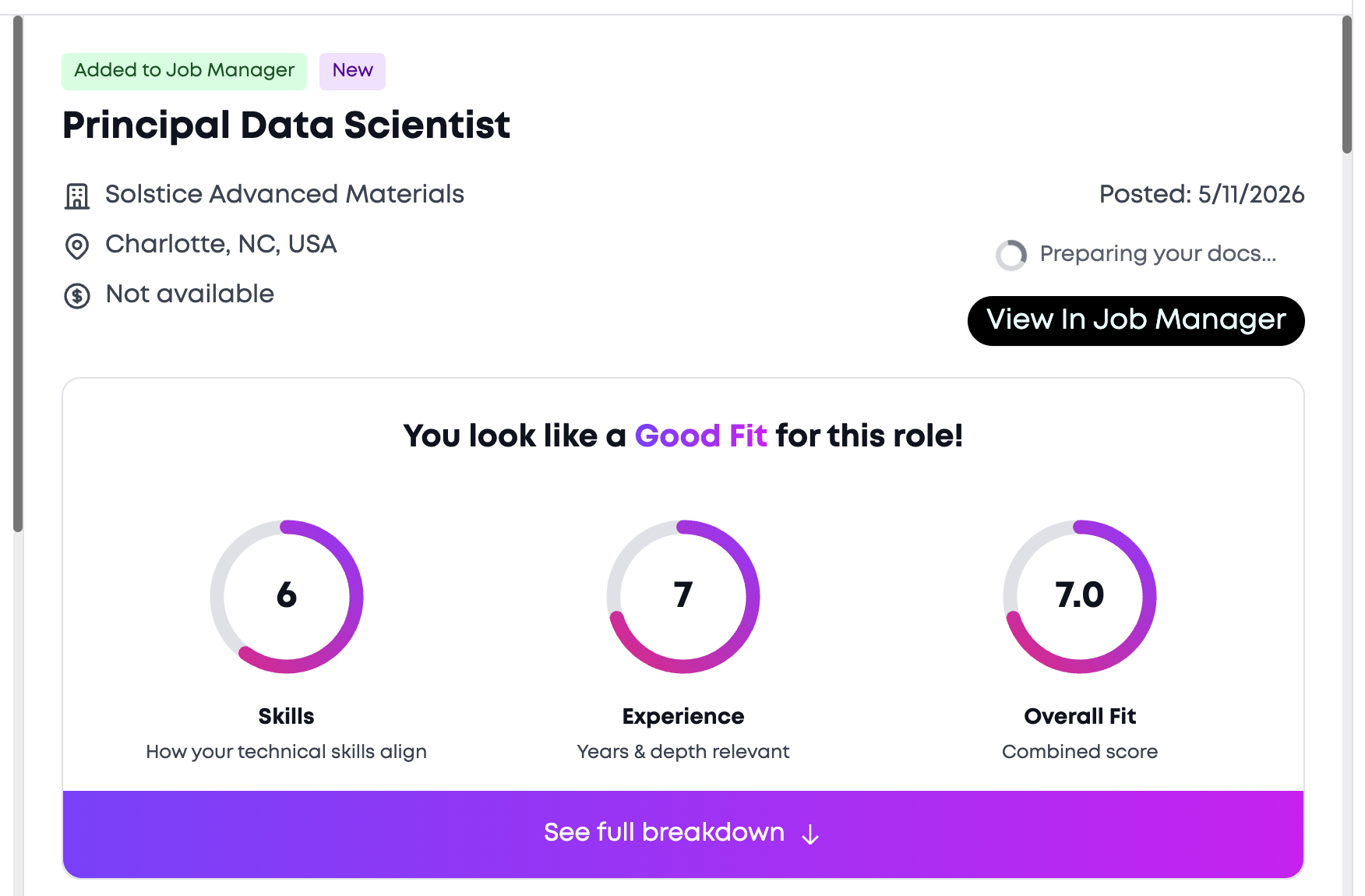
After building the resume, Jobflow matched him to ideal-fit roles which we find daily from more than 6 million opportunities we browse daily from employers' career sites.
For each role, Jobflow explained why it was a fit and which parts of his military experience were most relevant.
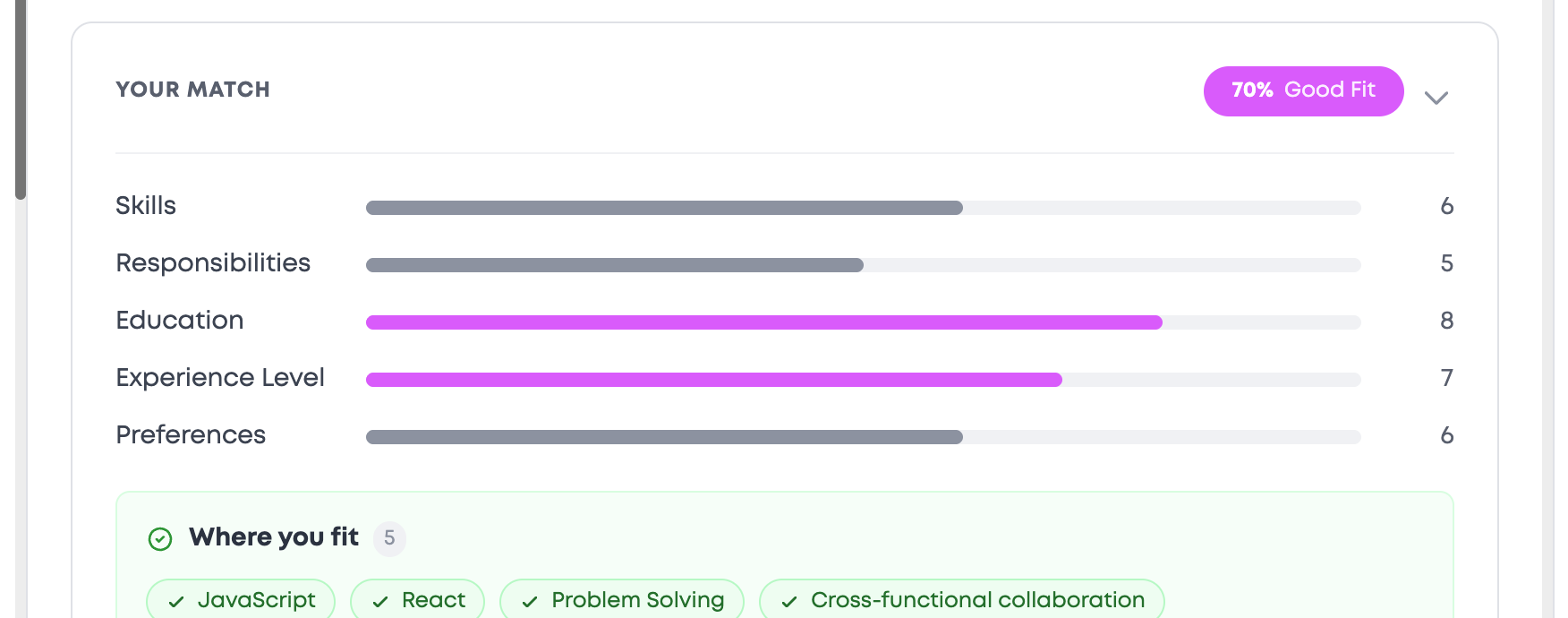
4. Coach him on fit and gaps
Jobflow showed where his background aligned strongly and where he might need to strengthen his positioning.
5. Tailor application materials for each job
Instead of sending the same generic resume to every employer, the service member could generate a tailored resume and cover letter for each role - with one click.
Jobflow emphasized the most relevant experience for each job, helping him look like a stronger fit without having to rewrite his resume manually every time.
The Results
With Jobflow, the service member moved from uncertainty to action, without all the hassle in between.
He no longer had to guess which civilian roles fit his background. He had a stronger resume, clearer career direction, job-specific coaching, and tailored application materials for each opportunity.
For the service member, the impact was practical and immediate:
- A civilian-ready resume built from his MOS and service experience
- Military language translated into employer-friendly terms
- Clearer understanding of transferable career paths
- Better-fit job matches based on actual skills and experience
- Tailored resumes and cover letters for each application
- More confidence applying to private-sector roles
- Less dependence on manually rewriting materials for every job
For career transition staff, Jobflow reduced the amount of repetitive resume-writing and translation work required for each participant, while giving them access to the most advanced career support on-demand.
Instead of spending every appointment rewriting military experience from scratch, staff could focus on higher-value coaching: helping the service member evaluate options, prepare for interviews, address gaps, and make smart decisions about their next career move.
Why It Matters
Transitioning service members do not need to be convinced that gained meaningful experience. What they need is help converting that experience into a format civilian employers understand.
That is where traditional job boards and resume templates often fall short. They may show openings or provide blank resume sections, but they do not solve the deeper translation problem.
Jobflow helps service members move through the full job-search workflow:
Military experience → civilian resume → transferable skills → matched jobs → fit coaching → tailored applications
This gives service members a clearer path from “I do not know how my experience translates” to “I know what I am qualified for, how to present myself, and I am ready to apply.”
________
Help service members and military spouses move from military experience to clear, confident, civilian-ready job applications. Try it out for free, or let's set up a demo for your career staff supporting veteran transition.
Jobflow gives transition teams a scalable way to build resumes, translate experience, match users to better-fit jobs, and tailor applications for every opportunity.


Related posts
Browse all posts


