
Enabling smarter hires through workforce and education partners
Customer Type: Employer partner, workforce board, education provider, training organization, or regional talent intermediary
Audience Served: Employers, hiring managers, workforce participants, students, trainees, career staff, and business services teams
Primary Challenge: Employers needed better-fit candidates, while local workforce and education partners had talent that was difficult to surface, prepare, and refer efficiently
Jobflow Workflow: Candidate profile creation → skills and training capture → employer job intake → talent matching → fit explanation → tailored candidate materials → employer referral
Key Outcomes: Faster access to prepared local talent, stronger candidate referrals, less employer screening burden, better use of training investments, and improved placement outcomes
Employers are buried in 'Easy Apply' applications and AI-generated resumes from services applying to jobs for candidates while they sleep. It's difficult to tell who the best-fit candidates are and if they are truly interested. All the noise gets in the way of them connecting with their top candidates.
Two things are clear:
1. Employers do not need more applicants. They need higher-intent candidates who are prepared, interested, and who are clearly able to demonstrate why their skills and experience match the job.
2. We have no shortage of talent. What we lack is a fundamental disconnect between the right talent and opportunity because talent teams, career staff, and job seekers are all working from fragmented systems with no clarity.
Across every region, workforce boards, Job Corps centers, colleges and universities, training providers, and nonprofit employment programs are already serving people who can fill local hiring needs. Many of these job seekers have valuable experience, transferable skills, recent training, certifications, and motivation to work.
Jobflow turns this talent pool into an intelligent, automated talent pipeline.
The Situation
A local employer (we'll call them TechWave) was hiring for 5 roles in technology, from development to hardware engineering.
TechWave had posted jobs online (Indeed, Dice, LinkedIn), but the response was like a flood. Some applicants were clearly unqualified. Some were offshore, and these positions were based locally. Other applicants may have been qualified, but it was difficult to tell based on their presentation.
Hiring managers spent valuable time sorting through resumes and prospecting databases, trying to determine who had the right background, skills, and experience to interview. They were weeks into this process without being any closer to having promising interviews.
At the same time, they contacted their regional workforce development board for assistance. They were hesitant at first due to inconsistent results in the past. But in this case, the workforce board had recently signed with Jobflow, and held a series of workshops with regional education tech providers serving relevant candidates who were onboarded to the workforce board's new talent system.
The Challenge
The problem was not that local talent was unavailable. TechWave did not have a reliable way to access that talent in a prepared, role-specific format. And employment referrals from the workforce development board were previously slow and largely unqualified.
The issue stemmed from the workforce board using fragmented systems that made identifying and referring talent inconsistent at best. An employer may contact a workforce partner and ask for candidates. Staff then have to search across resumes, case notes, spreadsheets, training records, memory, email threads, job-readiness updates, and disconnected systems to determine who might be a fit.
Even when qualified candidates are identified, their presentation from a weak resume, an inability to highlight relevant skills or accomplishments, and an inconsistently application can leave the impression of being a lower-quality candidate.
A candidate may be capable but have a weak resume. Another may have recent training but no clear way to explain how that training connects to the job. Another may be a strong fit but missing certain keywords the employer expects. Another may need coaching before being introduced.
Workforce boards and education providers have an opportunity to deliver massive value based on the amount of talent they have access to, and that they've helped prepare. The ability to instantly surface their talent to employers' jobs transforms them from a community resource to a practical hiring partner.
The Jobflow Approach
When an employer posts a job opening to Jobflow, or with their local workforce board, Jobflow instantly surfaces the best-matching candidates with reasoning, cutting out all the manual effort and guesswork by a recruitment team. This helps workforce and education partners improve the quality, speed, and clarity of employer referrals.
Here is how it works:
1. Local job seekers access services by provided by workforce development boards and education providers, where they are onboarded to Jobflow during intake. Instead of treating candidates as static resumes, Jobflow builds a richer profile around each participant onboarded by the workforce partner, including:
- Work history
- Skills
- Training
- Certifications
- Career goals
- Job preferences
- Transferable experience
- Application activity
- Fit for specific roles
- Gaps that may need coaching
Jobflow's service helps job seekers better prepare for their job search by extracting the key details about their skills and accomplishments that hiring managers want to hear about, and coaching them on their fit for each role to which they apply.
2. When an employer has a job opening, they can post it directly to Jobflow or send it to their local workforce development board. Jobflow will review the requirements against all talent onboarded by workforce and education partners, and instantly surface the top-matching candidates, detail why they fit, and facilitate connection between the employer and prepared candidates.
“Jobflow helped TechWave receive prepared local candidates whose experience, training, and fit were already aligned to the role.”
3. Workforce teams making referrals to their employer partners can see:
- Which candidates match open roles
- Why each candidate is a fit
- Which skills and experiences align
- What gaps or concerns may exist
- Whether the candidate needs coaching before referral
- How to tailor the candidate’s resume for that specific employer role
The result is cutting through all the noise in the market, and enabling smarter hires in a fraction of the time.
The Workflow in Action
TechWave shared their 5 job openings with their workforce development board partners, who dropped the job postings into the workforce board's Jobflow instance.
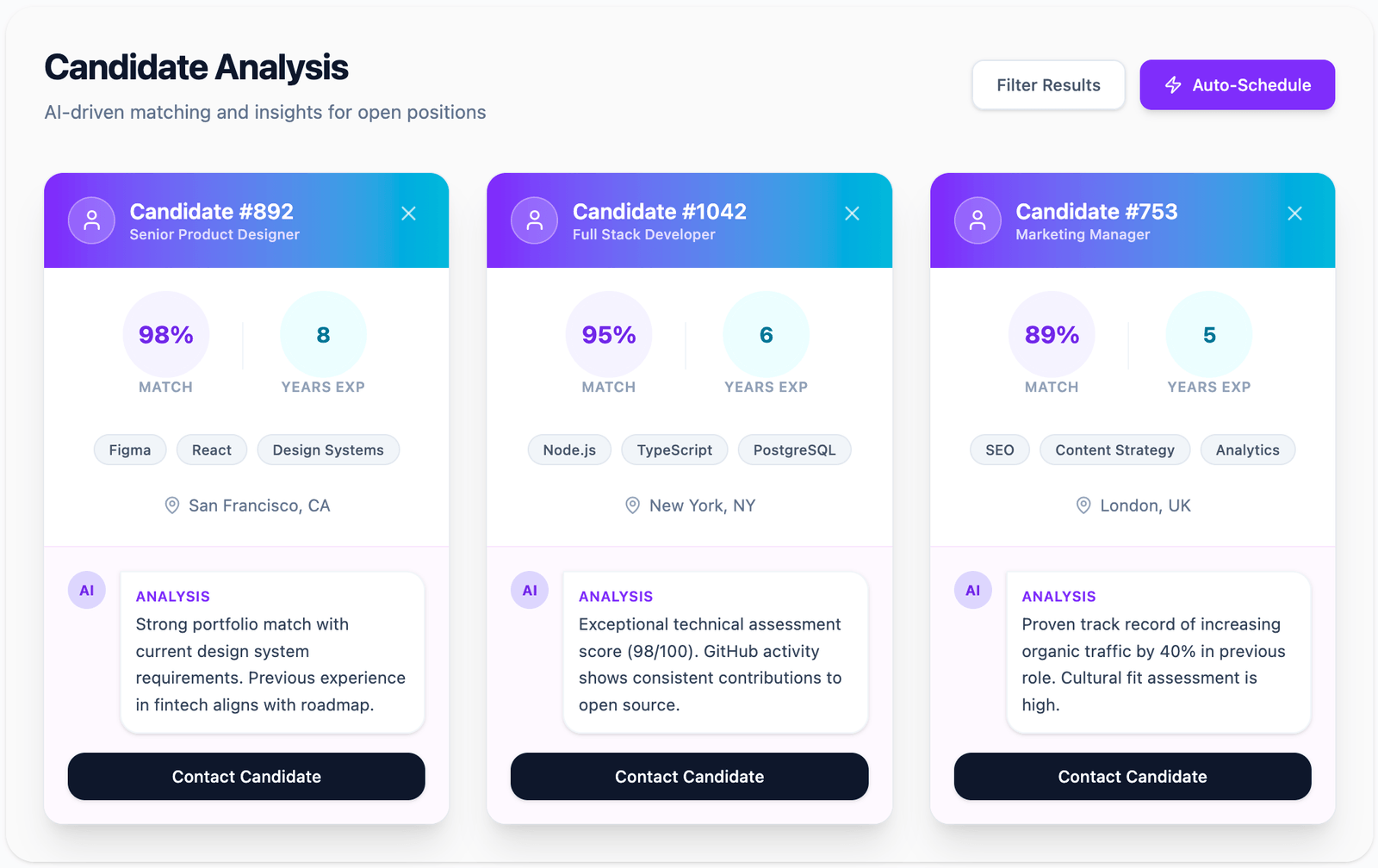
Within seconds, Jobflow identified candidates's digital profiles ranked against a range of criteria related to the job openings.
The workforce partner quickly identified the top candidates, prepared each candidate’s profile, and sent TechWave a strong shortlist weeks faster than they previously would have.
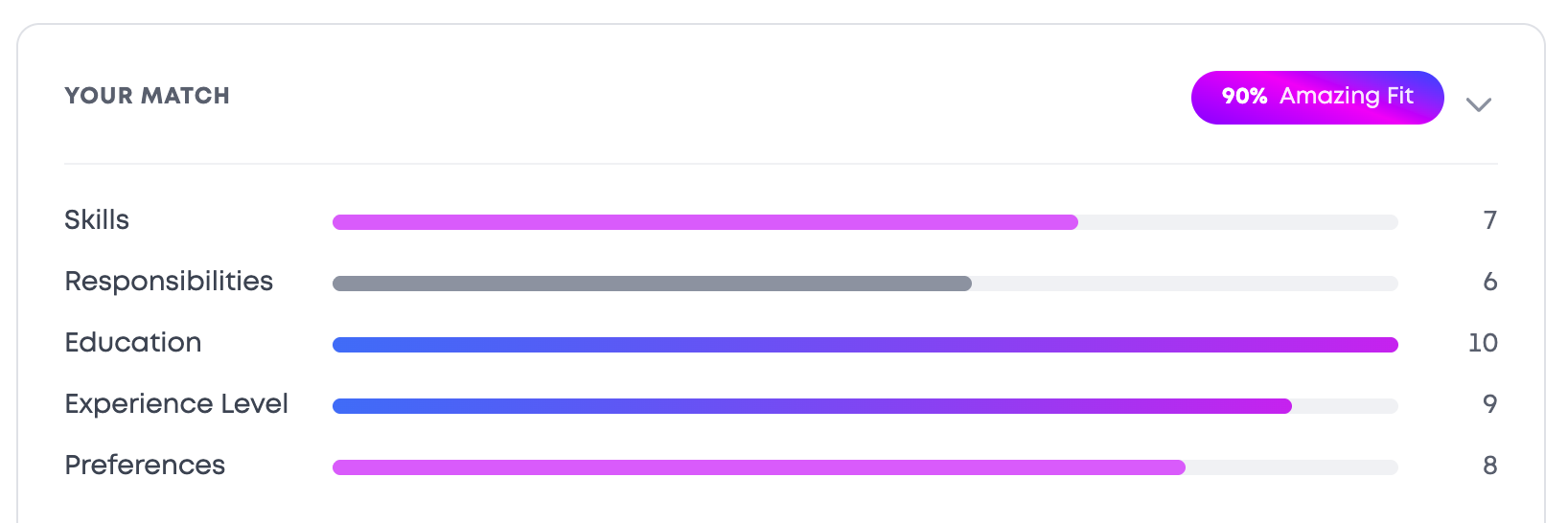
Each referral also became more actionable because the presentation highlighted their fit, taking all the guesswork out of the review process for TechWave's talent team.
The Results
Instead of slow manual searches or receiving generic referrals, the employer received a more focused shortlist of candidates whose skills, experience, and training aligned with the role. This led to them making 5 hires weeks faster than similar roles they were recruiting for in other markets. And they saved valuable staff time in the process.
The impact included:
- Faster access to local talent
- Better-fit candidate referrals
- Less resume-screening burden
- Stronger visibility into why each candidate matched
- More prepared candidates with tailored materials
- Better use of workforce and training investments
- Stronger employer confidence in workforce referrals
- Improved connection between local job seekers and real hiring demand
Why It Matters
Employers are overwhelmed by applicant volume, but they still struggle to find the right people.
At the same time, workforce boards, education providers, and training programs are serving people who are ready, or nearly ready, to fill those roles.
The disconnect is the lack of infrastructure to organize, match, prepare, and refer that talent at the speed employers need.
That's the gap Jobflow helps close between employers, workforce boards and education providers.
____
Help employers find prepared local talent faster, while helping participants reach real opportunities. Try it out for free, or let's set up a demo so you can see how we'll instantly surface the best-matching candidates to your jobs.
Jobflow helps workforce and education partners turn their candidate communities into employer-ready talent pipelines, delivering stronger referrals with less manual work.


Related posts
Browse all posts


