
Helping staffing firms, recruiters, and large employers identify best-fit talent without manual resume review
Customer Type: Staffing company, recruiting team, RPO, employer talent management team, federal agency, or large enterprise
Audience Served: Recruiters, hiring managers, candidates, employees, HR teams, and talent management leaders
Primary Challenge: Large candidate or employee pools were difficult to match against open roles without manual sourcing, keyword searching, and resume review
Jobflow Workflow: Role intake → candidate/employee matching → fit explanation → gap analysis → shortlist → tailored materials or career guidance
Key Outcomes: Faster shortlists, better-fit matches, less manual review, stronger submissions, improved internal mobility, and clearer career progression
Talent teams are often sitting on the answer to their own hiring challenge.
They have candidate databases full of people they have already sourced, screened, or placed before. Large employers and public agencies have thousands of employees with valuable experience, transferable skills, certifications, and career goals. But when a new role opens, finding the right people still often depends on manual searches, keyword filters, recruiter memory, resume review, disconnected HR records, or hoping the right candidate finds the opportunity and applies.
That creates a frustrating gap.
The talent exists, but it is hard to activate quickly.
Jobflow helps staffing, recruiting, and talent management teams turn their candidate or employee population into a searchable, matchable talent engine. For every open role an organization has, Jobflow identifies its best-fit people, explains why they match, flags gaps, and helps prepare stronger materials for submission, internal mobility, or career progression.
Case 1: Staffing Company Matching Candidates to Customer Reqs
The Situation
A staffing company received a steady flow of customer reqs across logistics, healthcare, customer service, administration, light industrial, and operations roles.
The team already had a large database of candidates. Many had resumes on file. Some had been placed before. Others had applied months earlier or completed interviews but were not selected at the time, and they interviewed a steady stream of candidates weekly.
The challenge was finding the right candidates quickly for each new customer req.
Recruiters were manually searching spreadsheets where they kept notes, their ATS where many candidate profiles were kept, reviewing client requirements in Hubspot, and trying to identify the best matches to contact. That process slowed response times and made it easy to miss qualified candidates whose resumes did not match the exact job title or keywords.
The Challenge
Each customer req required recruiters to answer the same questions:
- Who in our database is actually a strong fit?
- Who has similar experience, even if their job title is different?
- Who has the required skills, certifications, or availability?
- Who should we contact first?
- Which candidates need resume updates before submission?
- How do we explain why this person fits the role?
Manual review made this difficult to scale. Recruiters could move fast on familiar roles, but deeper candidate rediscovery was inconsistent.
The risk was that strong candidates stayed buried in the database while recruiters spent time sourcing new applicants.
The Jobflow Approach
Jobflow analyzed each customer req against the staffing company’s candidate pool.
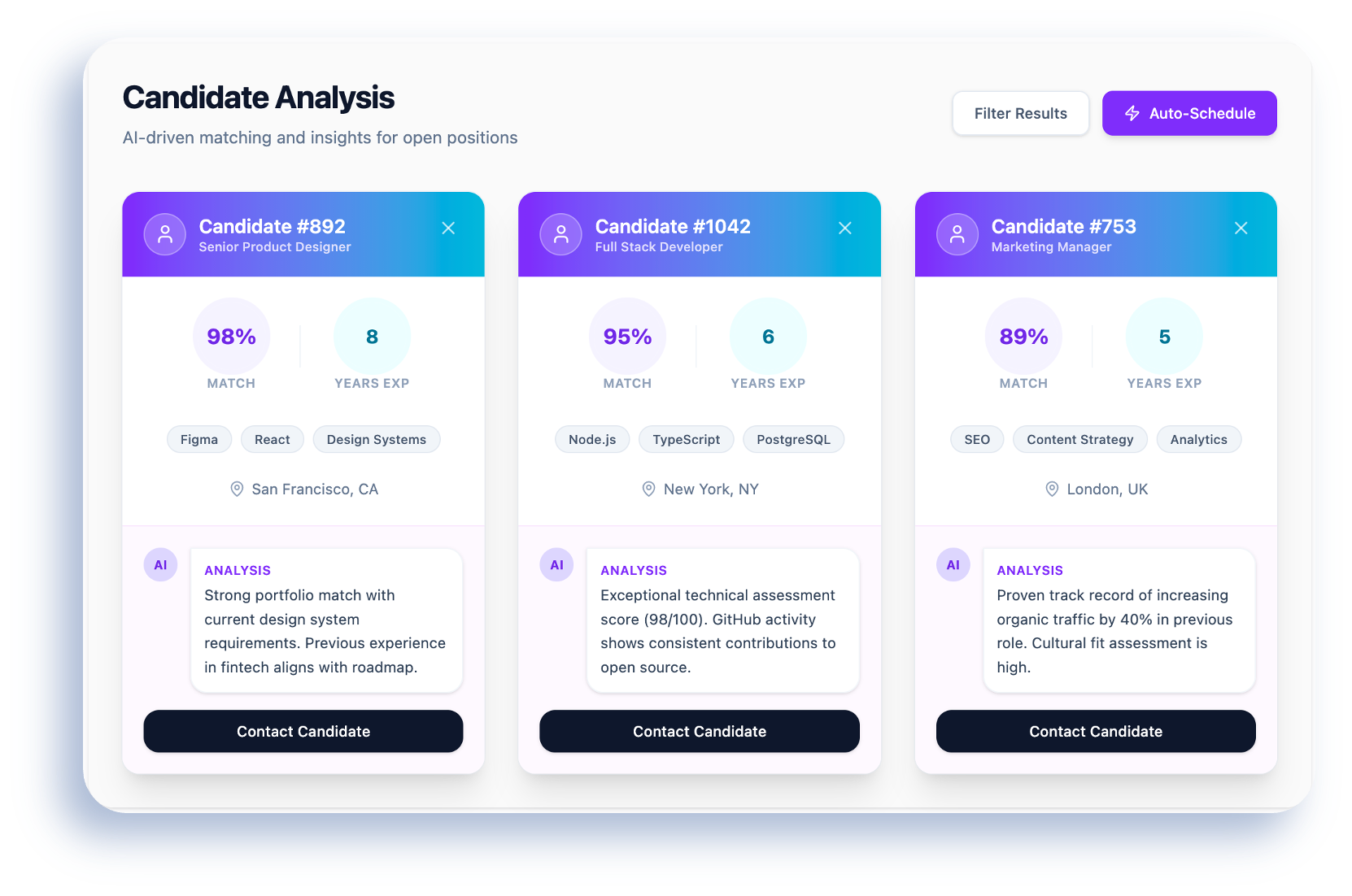
For every role, Jobflow surfaced a ranked shortlist of best-fit candidates based on skills, experience, credentials, work history, and fit as determined by how their recruiting team reviews candidates. Recruiters could see why each candidate matched, where gaps existed, and how to position the candidate for submission.
The recruiter could quickly review:
- Top-matching candidates
- Match reasoning
- Relevant experience
- Missing or weaker requirements
- Suggested positioning
- Resume tailoring opportunities
- Candidates worth reactivating
This turned the candidate database from a passive archive into an active matching engine that was constantly updated with new talent they interviewed, and new reqs that popped up.
Workflow in Action
A customer opened a req for a logistics coordinator.
Before Jobflow, the recruiter may have searched for “logistics coordinator,” “warehouse,” or “inventory” and manually reviewed resumes one by one.
With Jobflow, the recruiter imported the req and instantly saw candidates with relevant backgrounds in warehouse operations, inventory control, dispatch support, retail supervision, military logistics, shipping and receiving, and supply chain training.
One candidate had never held the title “logistics coordinator,” but had strong transferable experience managing inventory, coordinating deliveries, and supporting shift operations.
Jobflow explained the match, flagged a gap in specific software experience, and helped tailor the candidate’s resume to emphasize the most relevant logistics and coordination skills.
This workflow allowed the recruiter to contact better-fit candidates who were immediately identified, and submit stronger profiles to the customer with a higher probability of being hired.
Results
Jobflow helped the staffing team:
- Create candidate shortlists faster
- Reduce manual resume review
- Rediscover qualified candidates already in the database
- Submit better-fit candidates to customers
- Respond faster to reqs
- Improve recruiter productivity
- Reduce dependence on keyword searches
- Strengthen candidate positioning before submission
Jobflow helped recruiters move from manual database searching to instant candidate matching, giving them faster clarity on who was worth advancing for each customer req.
Case 2: Large Federal Agency Matching Employees to Internal Opportunities
The Situation
A large federal agency with more than 20,000 employees wanted to improve internal mobility and career progression while increasing retention.
The agency had employees across many functions, departments, locations, and career paths. Many people had skills and experience that could transfer into other roles, but employees did not always know which internal opportunities fit them. Managers and HR teams also lacked a simple way to identify existing employees who could grow into open roles.
Primary goals were helping employees understand their career pathways, prepare for advancement, and move into roles where their experience could create more value; and also reduce manual effort by talent management staff by helping them identify best-fit internal talent in an automated fashion.
The Challenge
Internal mobility was difficult because employee talent was not easy to match against open opportunities.
Employees often had questions like:
- What internal jobs am I qualified for?
- What roles could I grow into?
- Which skills from my current job transfer?
- What gaps do I need to close?
- How should I update my resume for an internal posting?
- How do I prepare for advancement into a different pathway?
Even if employees could identify internal opportunities, they still had to jump through hoops on USAJobs.gov to outline their experience, credentials, and value proposition within the 2-page maximum allowed by the federal job site. This requirement created unnecessary friction that prevented people from applying to internal opportunities due to the work involved to get application ready.
On the other side, HR and talent management teams had a related challenge:
- Which employees are strong fits for open roles?
- Who has transferable experience?
- Who is ready now?
- Who could be ready with coaching or training?
- How do we support career progression without manually reviewing every employee profile?
Without a matching layer, internal mobility depended too much on self-navigation, manager awareness, manual HR review, and employees already knowing what to search for.
The Jobflow Approach
Jobflow created a way to match employees against internal opportunities based on their experience, skills, goals, and transferable strengths.
Employees can build or improve their resume, answer questions to extract key details from their work history, be matched to and explore internal roles, see a granular breakdown of their fit, understand gaps, and receive guidance on how to become more competitive. And of course, Jobflow tailored and edited their resumes to maintain the 2-page requirement.
Then, talent management teams use the same matching intelligence to identify best-fit employees for open roles, support succession planning, and help employees move across career pathways before the candidates even applied.
For each internal opportunity, Jobflow showed:
- Best-fit internal candidates
- Why each employee matches
- Transferable skills
- Relevant experience
- Gaps or development needs
- Suggested next steps
- Resume or profile improvements
- Career pathway options
Jobflow helped employees see where they could grow next, while giving talent teams a faster way to identify internal candidates for open opportunities.
Workflow in Action
An employee in operations wanted to explore advancement but was unsure whether to pursue supervisory roles, program management, logistics, facilities, or administrative leadership. His current resume was largely his military service history, and it was 10 pages in length.
Using Jobflow, the employee was matched to 12 available internal opportunities, coached on his fit for each role, and allowed him to opt for which he wanted to apply.
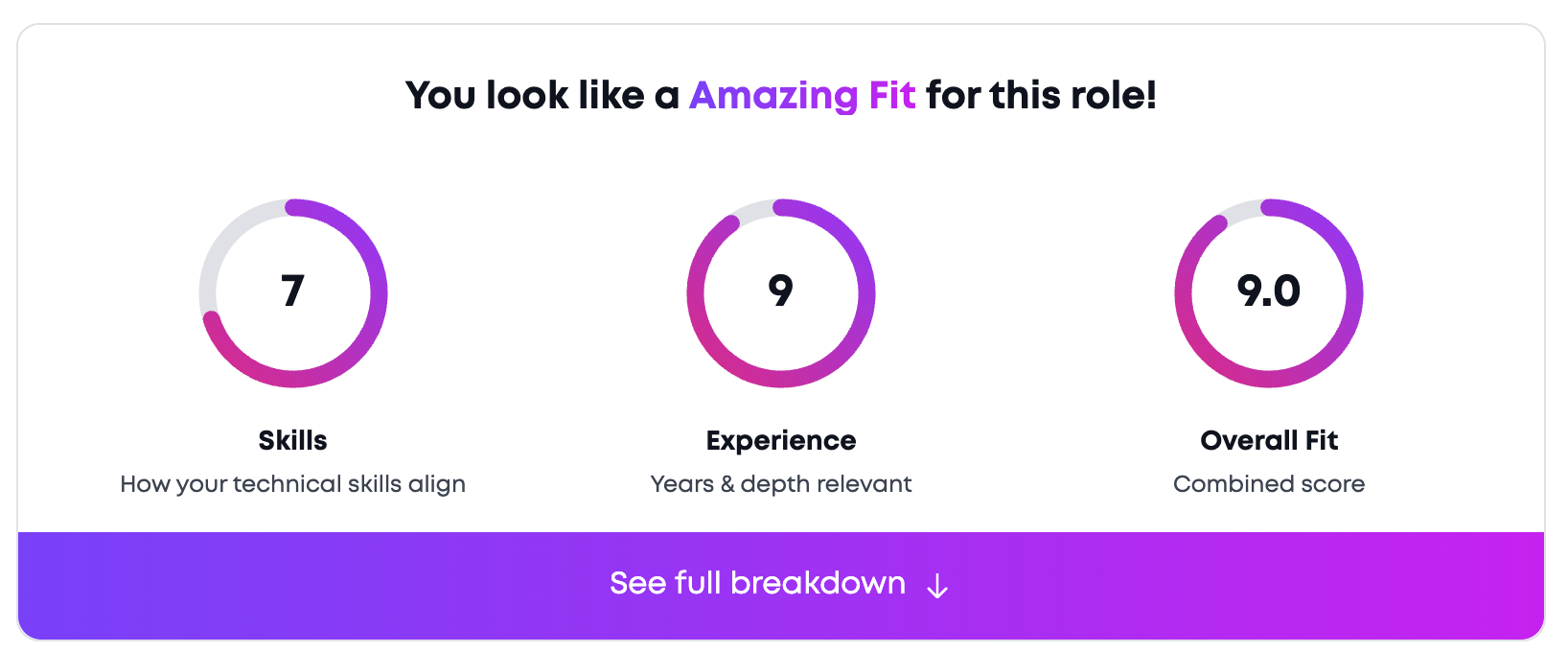
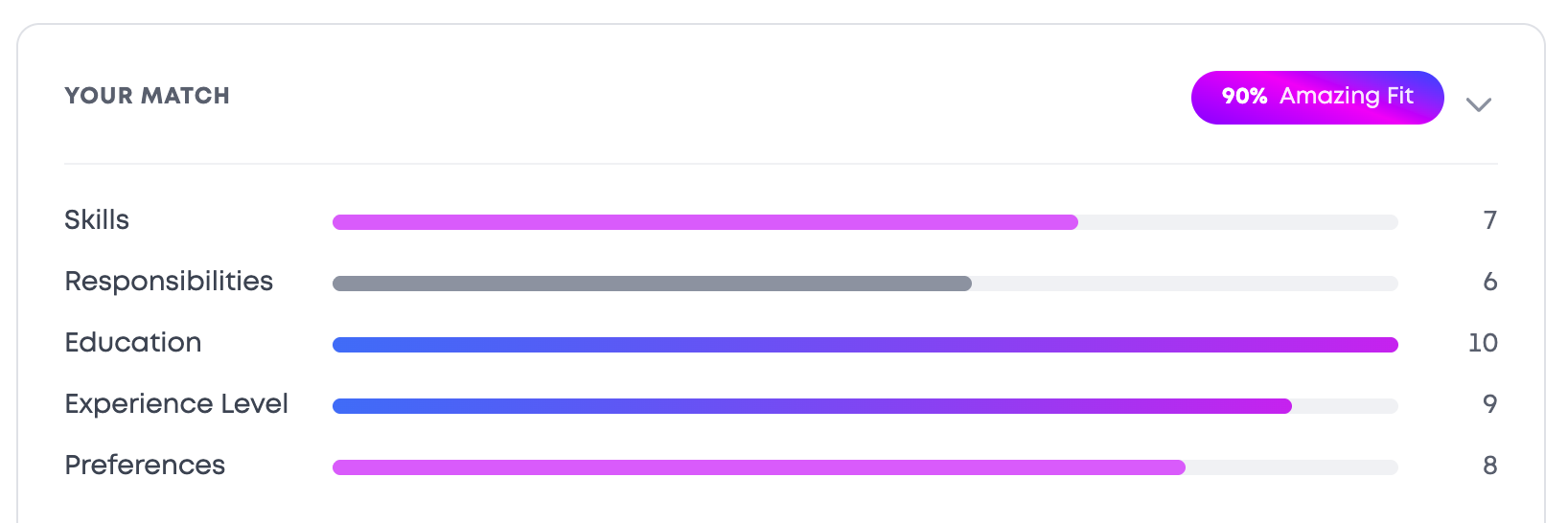
For a program coordinator role, Jobflow highlighted experience in scheduling, cross-team communication, compliance, reporting, and process follow-through, pulling from key accomplishments we knew from his background.
For a supervisory role, Jobflow emphasized team leadership, training responsibilities, performance support, and operational problem-solving.
For a logistics role, Jobflow identified relevant experience in equipment tracking, vendor coordination, inventory, and planning.
Jobflow also flagged gaps, such as missing certifications, limited budget experience, or lack of direct supervisory title. Instead of simply telling the employee they were or were not qualified, Jobflow showed what they could do next.That gave the employee a clearer career path and gave HR better visibility into internal talent that might otherwise be overlooked.
With one click, Jobflow created a 2-page, tailored resume that highlighted the best of his career relevancy and transferable skills to the different roles, and helped him submit stronger applications. He saved weeks of research, resume writing, and manual job search tasks, and was placed into a supervisory role by the talent management team.
Results
Jobflow helped the federal agency:
- Surface best-fit internal candidates for open roles
- Help employees understand career pathways
- Improve internal mobility and talent redeployment
- Reduce manual profile and resume review
- Identify transferable skills across departments
- Support career progression at scale
- Help employees prepare stronger internal applications
- Make better use of existing workforce talent
Why It Matters
Whether the talent pool is made up of staffing candidates or internal employees, the problem is similar: The right people may already be in the system, but teams need a faster, smarter way to find them.
Staffing firms need to respond to customer reqs quickly with better-fit candidates. Large employers need to understand their existing workforce and help employees move into roles where they can grow.
Jobflow helps both by matching open opportunities against real candidate or employee profiles, explaining the fit, identifying gaps, and preparing people to move forward.
That shifts talent work from manual review to intelligent matching.
___
Turn your candidate or employee population into an active matching engine for every open role. Try it out for free, or let's set up a demo to show you how talent teams are identifying top talent faster.
Jobflow helps staffing, recruiting, and talent management teams identify best-fit talent faster, explain why they match, and prepare people for the next opportunity.


Related posts
Browse all posts


