
Turning workforce participants into an organized, employer-ready talent pipeline for local growth
Customer Type: Workforce board, business services team, workforce contractor, employer relations team, or regional talent intermediary
Audience Served: Employers, job seekers, career staff, business services staff, training participants, and local workforce partners
Primary Challenge: Employer referrals were fragmented, manual, and dependent on disconnected records, staff memory, spreadsheets, and resume review
Jobflow Workflow: Participant profile creation → resume building and improvement → skills/training capture → employer job intake → candidate matching → fit explanation → employer referral
Key Outcomes: Faster candidate shortlists, better-fit referrals, less manual sourcing, stronger employer service, better collaboration between career and business services, and more value from the existing participant community
Job-seeking customers are more than service recipients. They are a vibrant talent community and the answer to fueling local growth.
Across most workforce regions, there are thousands of people with valuable work experience, transferable skills, recent training, certifications, career goals, and motivation to work. Many are already engaged with workforce programs. Many have received resume help, training support, job search assistance, or case management services.
But too often, that talent is not organized in a way that makes it easy to activate for employers.
When an employer partner contacts a workforce board with an open role, business services teams often have to rely on a fragmented process: staff memory, spreadsheets, resume folders, email chains, case notes, disconnected systems, and manual searches across participant records.
At the same time, job seekers may be navigating resume help in one system, job search in another, applications across employer websites, and follow-up through staff conversations.
That creates a gap between the talent already in the workforce system and the employers who need it.
Jobflow helps close that gap by turning participant profiles, resumes, skills, training, goals, and job-readiness signals into a searchable, matchable talent pipeline. When an employer has an opening, business services teams can quickly identify better-fit candidates, understand why they match, prepare them for referral, and respond to employers with greater speed and confidence.
The Situation
A regional workforce board had strong relationships with local employers. Its business services team regularly worked with companies that needed candidates for roles in logistics, healthcare, manufacturing, technology, hospitality, and skilled trades.
The board also served a large population of job seekers through career services, training programs, and case management support. Many participants had relevant experience. Some had recently completed training. Others had transferable skills from previous industries. Many were actively looking for work.
But the system did not make it easy to connect those two sides.
When an employer shared a job opening, the business services team had to determine which participants might be a fit through a series of manual, fragment processes. Staff would check with career coaches, search through resumes, look through notes, review spreadsheets, ask who was job-ready, and chase participants with whom they had recently worked.
The team had talent that was qualified. The employer had demand. But the connection between the two was anything but automated and consistent.
The Challenge
The challenge was that the candidate pipeline was fragmented, not that local talent was unavailable or untrained.
Participants were often represented by static resumes, case notes, or disconnected records Those records did not always reflect the full picture of a person’s potential, including:
- Transferable skills
- Recent training
- Certifications
- Work preferences
- Career goals
- Availability
- Job readiness
- Application activity
- Relevant accomplishments
- Gaps that needed coaching
- Roles they were willing to pursue
The records were also not available in one system that was easy to source, which made referrals for business service teams slow and inconsistent.
An employer might ask for five qualified candidates for a role, but staff had no instant way to know which participants were the best fit. A career coach might know one participant personally, another staff member might remember someone from a recent training cohort, and a spreadsheet might include several names that were no longer current.
That process created several problems:
- Strong candidates could be missed
- Referrals depended heavily on staff memory
- Employers waited longer for candidate recommendations
- Staff spent time manually reviewing resumes and making judgment calls
- Career services and business services teams operated from fragmented information
- Participants were not always matched to opportunities they were qualified for
- Employer engagement was harder to scale
The larger issue was strategic economic development.
Most workforce systems were designed to provide services, document activity, and support compliance. They were not designed to continuously activate the participant community as an organized talent pipeline to meet growing demand of local employers.
That is the opportunity Jobflow helps unlock.
The Jobflow Approach
At intake, Jobflow helps build a richer digital profile around each participant that includes their skills, work history, training, certifications, career goals, job preferences, transferable experience, application activity, and signals of readiness.
This allows workforce and business services teams to understand not only what a participant has done, but where they may fit next. And all profiles are available in a simple platform.
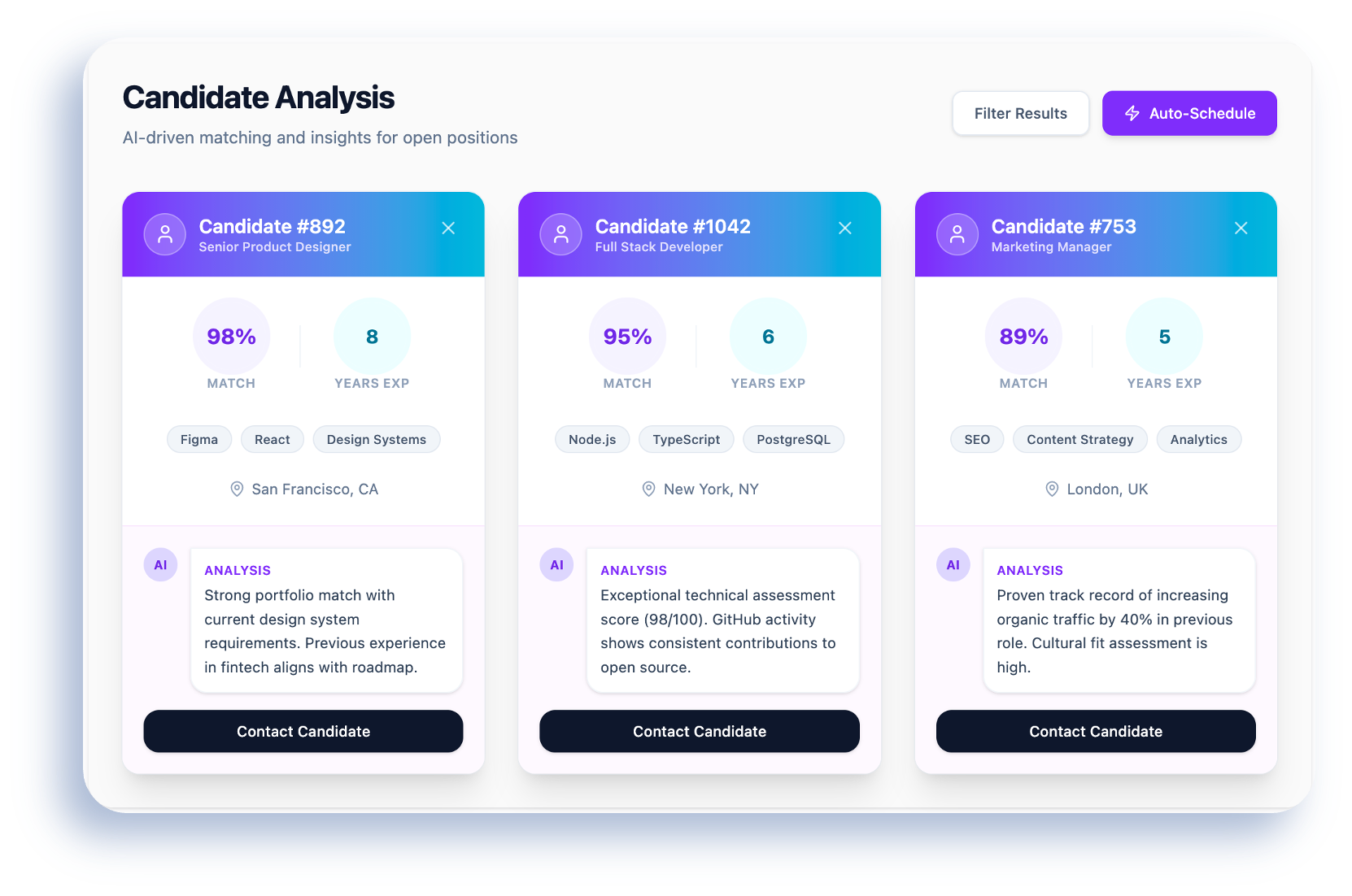
When an employer shares a job opening or the business service team browses local jobs pulled in daily by Jobflow, our system analyzes the role against the participant pool and surface top-matching candidates based on skills, experience, training, and fit.
The business services team can then review the shortlist, understand why each person matched according to granual scoring, coordinate with career staff, and prepare candidates for referral.
Instead of starting from scratch each time an employer needs talent, Jobflow automatically surfaces the best-fit candidates to answer:
- Who in our participant community is a strong fit for this role?
- Why are they a fit?
- What experience, training, or skills align?
- What gaps should staff address before referral?
- Which candidates are ready now?
- Which candidates could become ready with coaching?
- How do we prepare stronger application materials for the employer?
This turns the workforce participant base into an active employment engine.
The Workflow in Action
An employer partner contacted the workforce board with several openings for entry-level production supervisors and logistics coordinators. The company wanted candidates who had reliable work history, leadership potential, inventory or warehouse experience, basic computer skills, and the ability to work in a fast-paced environment.
Before Jobflow, the business services team might have sent emails to career coaches, searched through resumes, checked spreadsheets, reviewed case notes, and asked staff if they knew anyone who might be a fit.
That process could take days or weeks.
With Jobflow, before the team even imported the employer's jobs into the system, they realized Jobflow already had the jobs as part of its automated daily import of more than 6 million job openings. Within seconds, Jobflow compared the role against active participant profiles and surfaced a shortlist of candidates whose backgrounds aligned with the employer’s needs, with the top 5 being above an 80% match.
The system identified candidates with experience in:
- Warehouse operations
- Shift leadership
- Inventory control
- Logistics support
- Retail supervision
- Military supply operations
- Manufacturing
- Customer service leadership
- Equipment handling
- Safety procedures
- Team coordination
For each candidate, Jobflow explained why the person matched the role, and the team can click each profile to see a more granular breakdown of the fit with reasoning.
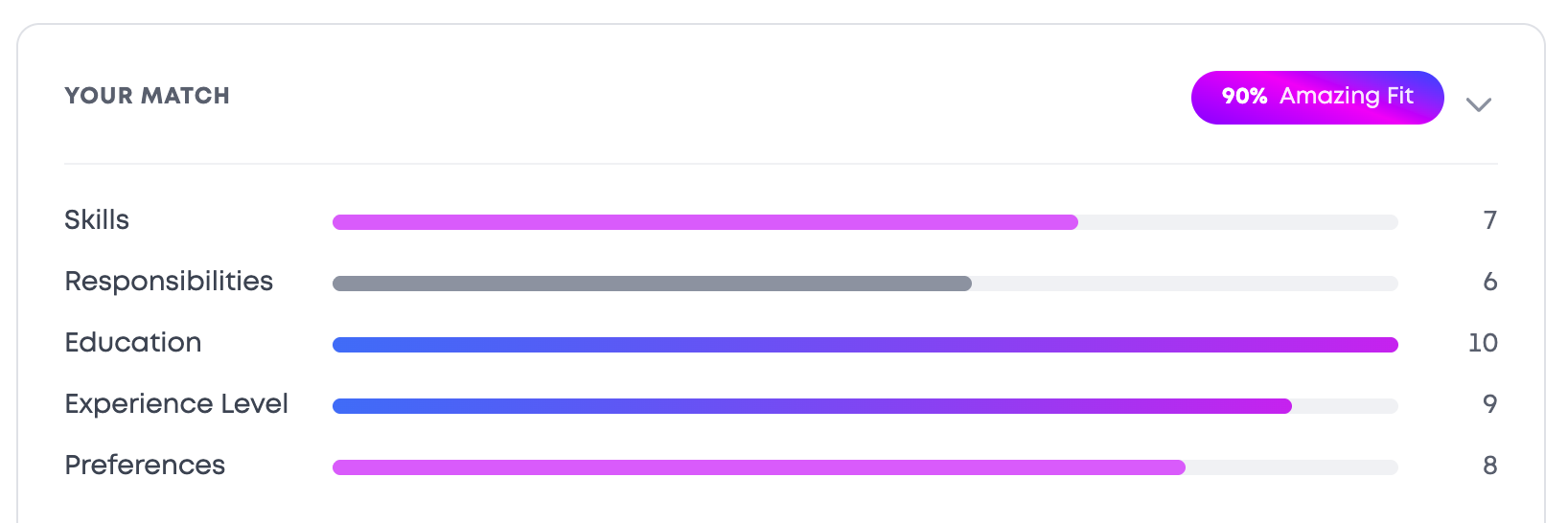
One candidate had not previously held the title “logistics coordinator,” but had several years of warehouse and inventory experience, had recently completed supply chain training, and previously supervised small teams in a retail environment.
Another candidate had military logistics experience but needed help translating that background into civilian language.
A third candidate had completed a manufacturing training program and showed strong alignment with entry-level production leadership, but needed coaching before referral.
Instead of manually reviewing dozens or hundreds of resumes, the business services team could quickly see which candidates were strongest, their recent activity, which needed additional preparation, and which should be prioritized for employer follow-up.
Preparing Candidates for Referral
Jobflow did not simply produce a list of names. The career staff or business service team could instantly connect with the best-fit candidates, forward their profile on to the employer, or invite them to formally apply to the roles.
In doing so, Jobflow helps tailor the candidate’s resume and cover letter for the specific employer role, emphasizing the experience and skills most relevant to that opportunity.
This meant employer referrals are stronger, more personalized, and easier to understand for role alignment. And all the manual effort and guesswork on both sides was removed, saving weeks of recruitment and prospecting work.
For employers, that creates a better experience. For staff, it reduces manual screening.
For participants, it creates more chances to be matched to opportunities they may not have found or recognized on their own.
The Results
Jobflow helped the business services team move from manual sourcing to faster, better-fit referrals.
Instead of relying on fragmented records, staff memory, or disconnected communication between teams, the workforce board could use Jobflow to identify relevant candidates from the participant pool and prepare them for employer opportunities.
The impact included:
- Faster candidate shortlists for employer partners
- Better-fit referrals based on skills, experience, training, and readiness
- Less manual resume review and candidate searching
- Stronger collaboration between career services and business services teams
- More value from existing participant data
- Better use of training investments and workforce services
- Stronger employer engagement through more relevant candidate recommendations
- More opportunities for participants to be discovered for roles that fit
- A clearer connection between workforce services and local economic growth
The biggest shift was strategic. Participants were no longer viewed only as people receiving services. They became part of a living talent community that could be organized, matched, coached, and connected to local employers more effectively.
Why It Matters
Every workforce region has people with skills, experience, recent training, and potential. Employers need that talent. The missing piece is often the infrastructure to connect the two sides quickly and intelligently.
Jobflow helps workforce teams make that connection.
- Participants get matched to better-fit opportunities.
- Staff spend less time manually searching and screening.
- Employers receive faster, more relevant candidate referrals.
- Workforce boards become more valuable partners in local economic growth.
_________
Turn your participant database into an active employment engine for local employers. Try it out for free, or let's set up a demo for your career staff and business services teams providing referrals to employer partners.
Jobflow helps workforce and business services teams surface better-fit candidates, prepare them for referral, and connect local talent to employer demand faster.


Related posts
Browse all posts


